Pantry staples checklist for busy households
Last updated:
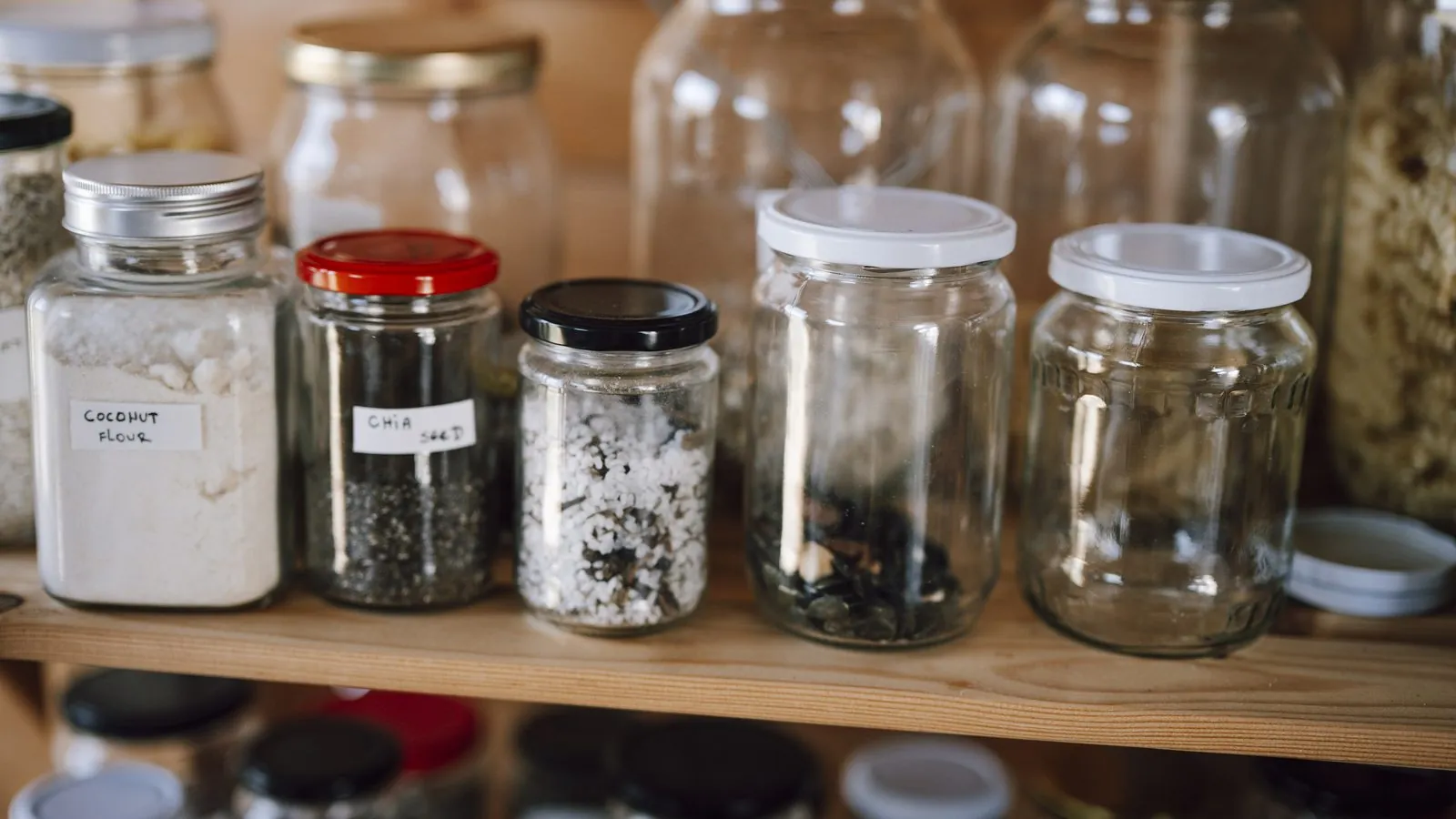
Photo: Shixart1985, Container storage at a kitchen pantry with different types of food items in jars and bottles at home · CC BY 2.0 · cropped · All photo credits

A well-stocked pantry means you can pull a meal together on a busy night without a dash to the shops. Here's a simple checklist to start from. Swap things in and out to suit what your household actually eats.
1. Start with what you cook
Before you stock up, jot down five or six meals your household eats often. Your staples are the ingredients those meals share. There's no point buying a big bag of something nobody uses.
2. The checklist
Tick off what you already have, then add the gaps to your shopping list.
Grains and pasta - [ ] Rice - [ ] Pasta (a long and a short shape) - [ ] Rolled oats - [ ] Flour - [ ] Noodles or couscous
Tins and jars - [ ] Tinned tomatoes - [ ] Tinned beans and chickpeas - [ ] Tinned fish - [ ] Stock (tins, cartons or cubes) - [ ] Tomato paste
Dried goods - [ ] Lentils - [ ] Dried herbs and a few spices you use - [ ] Breadcrumbs
Oils, sauces and condiments - [ ] Cooking oil - [ ] Vinegar - [ ] Soy sauce - [ ] Salt and pepper - [ ] Honey or sugar
Baking basics (if you bake) - [ ] Baking powder - [ ] Bicarb soda - [ ] Vanilla
Long-life extras - [ ] Long-life milk or a plant-based alternative - [ ] Peanut butter or another spread - [ ] Crackers
3. Buy staples the smart way
- Compare unit prices. Larger supermarkets and online grocery stores usually show the price per kilo, litre or 100 grams on the shelf label. That makes it easier to compare a big bag with a small one.
- Only bulk-buy what you'll use. A big bag is only good value if you finish it before it goes stale.
- Watch for specials on things you already use. Stock up on staples you'd buy anyway, not on things you don't need.
4. Store it well
- Keep the pantry cool and dry, and away from the oven.
- Decant opened dry goods like flour, rice and oats into airtight containers.
- Put newer items at the back and older ones at the front, so you use the older stock first.
- Label containers with what's in them and the date you opened them.
5. Know your dates
"Best before" and "use by" mean different things. For a clear explanation, and for anything about food safety, see Food Standards Australia New Zealand (FSANZ): FSANZ food safety basics. Follow the storage instructions on each pack, especially once it's opened.
6. Check in every few weeks
Have a quick look through the pantry before your big shop. Move anything close to its date to the front and plan a meal around it. This is also a good time to wipe down shelves and spot anything that's been forgotten.
The short version
- Base your staples on meals you actually cook.
- Use the checklist to find the gaps.
- Compare unit prices and only bulk-buy what you'll use.
- Store dry goods airtight, with the oldest at the front.
- Check FSANZ for date labels and food safety.
We don't list prices here, because they change depending on where you are. Check the retailer's site for the current price where you are.
Related guides
Cutting food waste at home: simple, practical steps

Nappies and wipes: what to check before you buy

Kids' birthday party on a budget: a simple plan
Card photos: Photo credits